
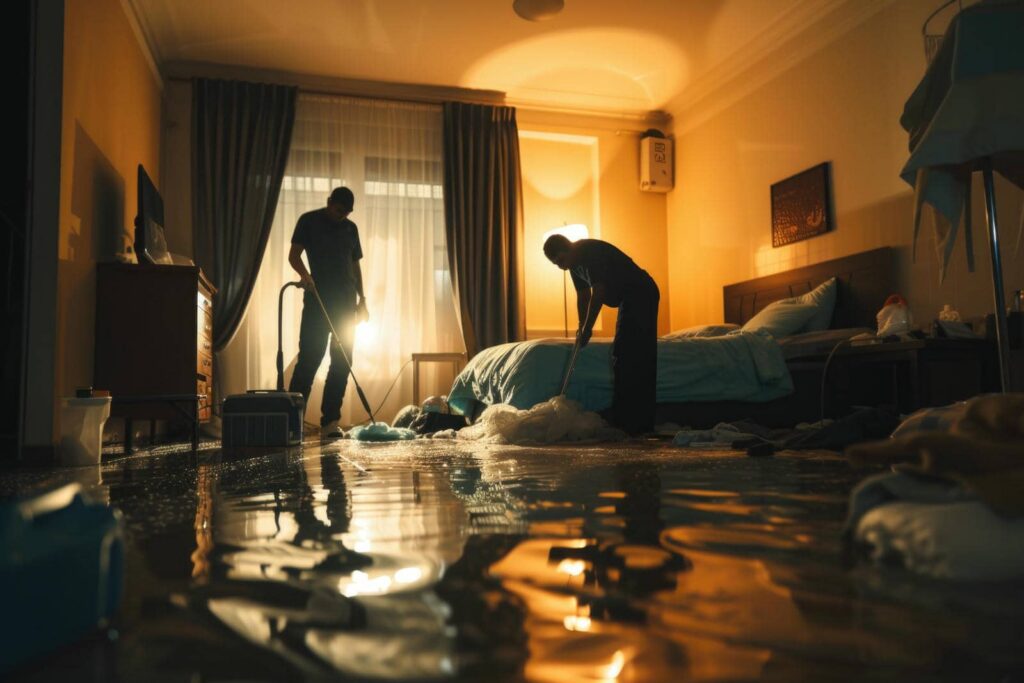
When faced with water damage, your immediate response can make all the difference. You’ll want to identify the source quickly, as this prevents further complications. Next, evaluating the severity of the damage is vital for effective remediation. Finally, documenting your water damage inspection findings accurately can streamline the insurance claims process. Understanding these steps is essential, but knowing how to execute them effectively is where the real challenge lies. What should you focus on first?
Key Takeaways
- Identify Sources: Quickly locate the source of water, such as leaks from pipes, roofs, or appliances, to stop further damage.
- Inspect Affected Areas: Check walls, ceilings, and floors for discoloration, warping, or musty odors indicating water intrusion and potential mold growth.
- Document Everything: Take detailed photographs and notes of all damage for insurance claims and future reference.
- Assess Damage Severity: Evaluate how extensive the damage is to prioritize immediate repairs and prevent escalation.
- Seek Professional Help: Contact water damage specialists promptly for a thorough assessment and remediation to ensure proper restoration.
How to Spot Water Damage Early?
To effectively spot water damage early, you need to be vigilant about subtle signs that might otherwise go unnoticed.
Start by inspecting areas around plumbing fixtures, as leaks can lead to mold growth if left unchecked. Look for discoloration on walls or ceilings, which often indicates moisture intrusion. A musty odor may signal hidden mold, suggesting a more serious issue.
Pay attention to peeling paint or wallpaper, as these can also point to underlying water problems. Regularly check your basement and crawl spaces for dampness, which can be a breeding ground for mold.
Assess Water Damage Severity and Identify the Source
While evaluating water damage severity, it’s essential to pinpoint the source of the issue to prevent further complications.
Begin with source identification; check for leaks in pipes, roofs, or windows. Understanding where the water is coming from allows you to address the immediate problem effectively.
Next, conduct a thorough damage assessment by inspecting walls, floors, and personal belongings for signs of water intrusion. Look for discoloration, warping, or mold growth, as these indicators reveal the extent of the damage.
Document your findings meticulously, as this information will be vital for any necessary repairs.
How to Document Water Damage for Insurance Claims
Documenting water damage for insurance claims is essential, as accurate records can greatly impact your compensation. Proper documentation facilitates the claim process and ensures a thorough damage assessment.
Follow these steps to create an effective record:
- Photograph Everything: Capture clear images of the damage, including walls, floors, and personal belongings.
- Create a List: Itemize damaged items and their estimated value, noting purchase dates if possible.
- Record Conditions: Document the extent of water exposure, including moisture readings and affected areas.
- Collect Estimates: Obtain repair estimates from professionals to support your claim.
This detailed approach strengthens your case and fosters a sense of community among those experiencing similar challenges.
Frequently Asked Questions
How Quickly Should I Address Water Damage After Discovery?
You should address water damage within 24 to 48 hours to prevent mold growth. Acting quickly ensures your insurance claims process remains smooth, minimizing long-term damage and fostering a sense of security in your home.
What Tools Are Best for Detecting Hidden Water Damage?
You’d think a simple towel could solve hidden water damage, right? Instead, grab moisture meters and thermal imaging tools. They’ll help you pinpoint issues lurking behind walls and floors, ensuring you tackle problems effectively and efficiently.
Can I Handle Water Damage Repairs Myself?
You can handle minor water damage repairs yourself, but consider cost considerations and necessary repair materials. For extensive damage, you’ll benefit from professional help to ensure safety and effectiveness, ultimately protecting your home’s integrity.
How Does Humidity Affect Water Damage Assessment?
Humidity greatly impacts your water damage assessment. High moisture levels can hinder drying techniques, leading to inaccurate evaluations. You must account for the humidity’s influence to ensure an effective and precise assessment of the damage.
What Are the Health Risks Associated With Water Damage?
“An ounce of prevention’s worth a pound of cure.” Water damage poses health risks like mold growth and compromised structural integrity, leading to respiratory issues and allergic reactions. Addressing these problems promptly is essential for safety.
Summary
In the face of water damage, think of your home as a vessel traversing turbulent waters. By acting swiftly, you can steer clear of disaster. Identify the source to halt the flood, assess the damage like a captain surveying the hull, and document your findings for the insurance journey ahead. With proper ventilation, you’ll set sail towards recovery, ensuring your ship remains seaworthy. Stay vigilant, and your efforts will guide you safely through the storm.